
Perfume in Antiquity
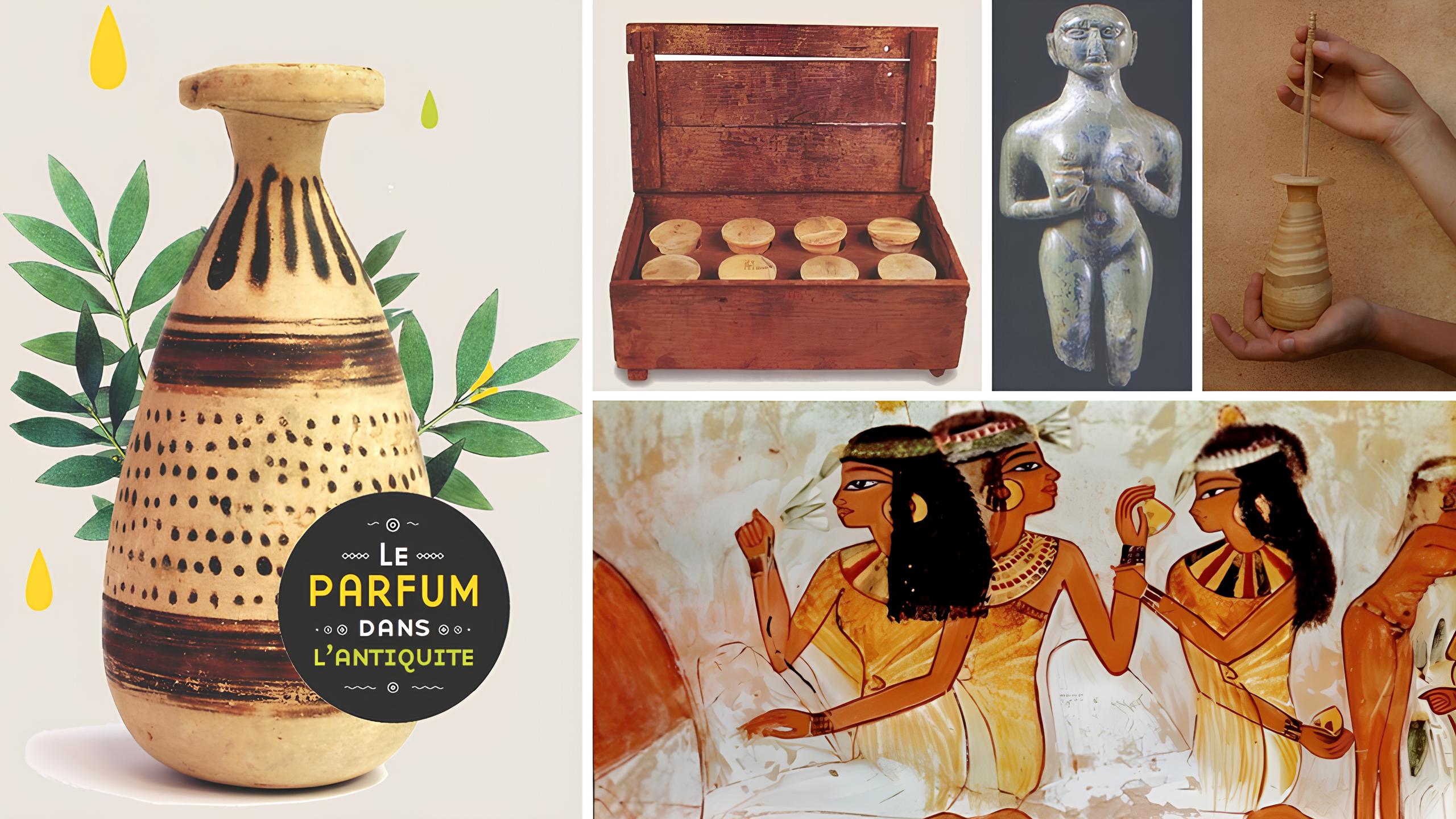
A journey into the perfumed practices of the ancient Mediterranean world, from Egypt to Corsica in the 1st millennium BCE. The result of a collaboration between the Université de Bretagne Sud and the Università di Corsica, within the MAGI programme, an ANR laureate.
THE PROJECT
Origin
Initiated by researchers from the Université de Bretagne Sud, under the impetus of Professor Dominique Frère, within the framework of the ANR-awarded MAGI programme.
Corsican adaptation
The project developed at the FRES of the Università di Corsica, ‘Corsica in the dynamics of the Etruscan world and the Tyrrhenian space’, adopts an innovative interdisciplinary approach.
Research thesis
Begun in September 2022 by Claudia Cristofari, doctoral student, under the joint supervision of Professors Vincent Castola (SPE/UCPP) and Stéphane Bourdin (HiSoMA, Lyon 2).
THESIS SUBJECT
« Approche interdisciplinaire de la Corse et des Corses du XIIe au IIe siècle avant notre ère : dynamiques méditerranéennes, paléoenvironnement, occupation de l’espace, ressources et société indigène. »
The interactive panel
Click on the icon to display a panel.
Click and hold, then move the mouse to rotate in 3D.
EXHIBITION CONTENTS
SCIENTIFIC TEAM
Pr. Dominique Frère
Scientific director
Université de Bretagne Sud - Programme MAGI/ANR
Claudia Cristofari
Doctoral student
Università di Corsica - FRES 3041
Pr. Vincent Castola
Co-supervisor
SPE / UCPP - Università di Corsica
Pr. Stéphane Bourdin
Co-supervisor
HiSoMA - Université Lyon 2
Zéïnab Aly Camara
Graphic Design
Student · Università di Corsica
Exhibition panels
Click on an image to view it in a new tab.
Panel 01
Project presentation
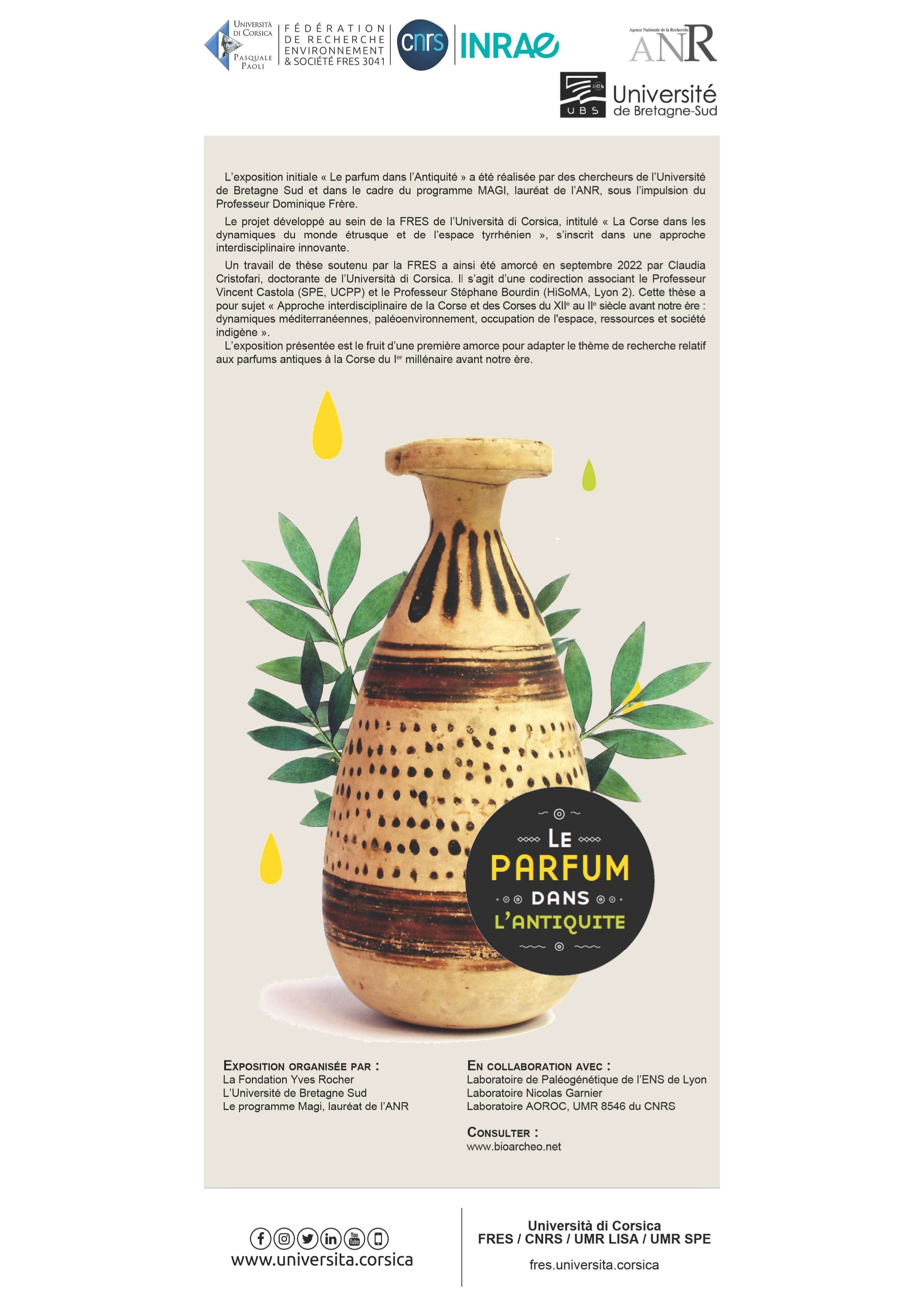
The exhibition 'Perfume in Antiquity' was produced by researchers from the Université de Bretagne Sud as part of the ANR-awarded MAGI programme, under the leadership of Professor Dominique Frère. The project, developed within the FRES of the Università di Corsica, takes an innovative interdisciplinary approach aimed at adapting the theme of ancient perfumes to Corsica of the 1st millennium BCE.
Panel 02
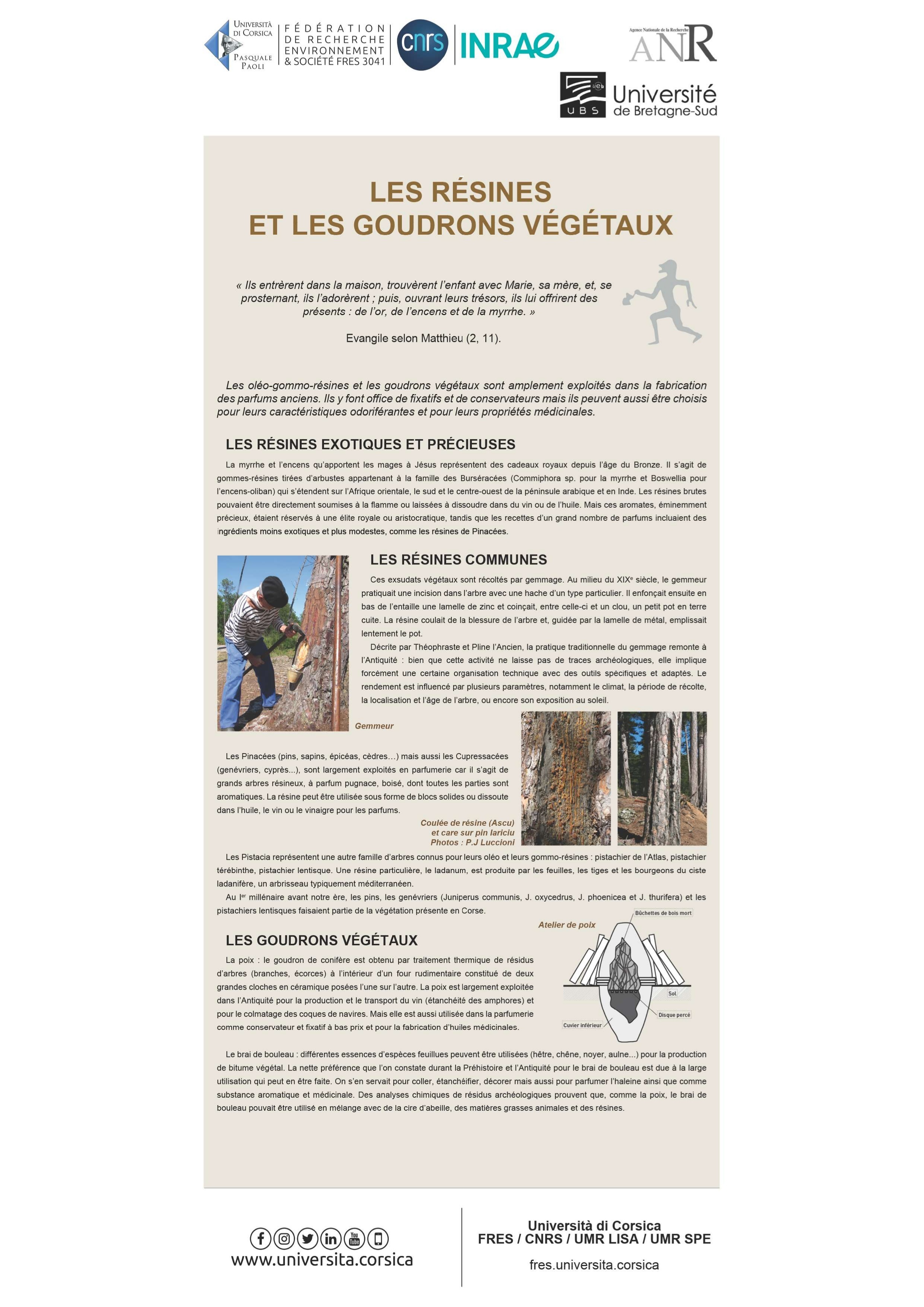
Resins and plant tars
Oleo-gum-resins and plant tars – myrrh, frankincense, Pinaceae resins – play a central role in ancient perfumery. They serve as fixatives, preservatives and aromatics, combining odoriferous virtues with medicinal properties. Their harvesting, described by Theophrastus and Pliny the Elder, dates back to Antiquity. Exotic resins such as myrrh and frankincense were reserved for the royal elite, while common resins were collected by tapping.
Panel 03
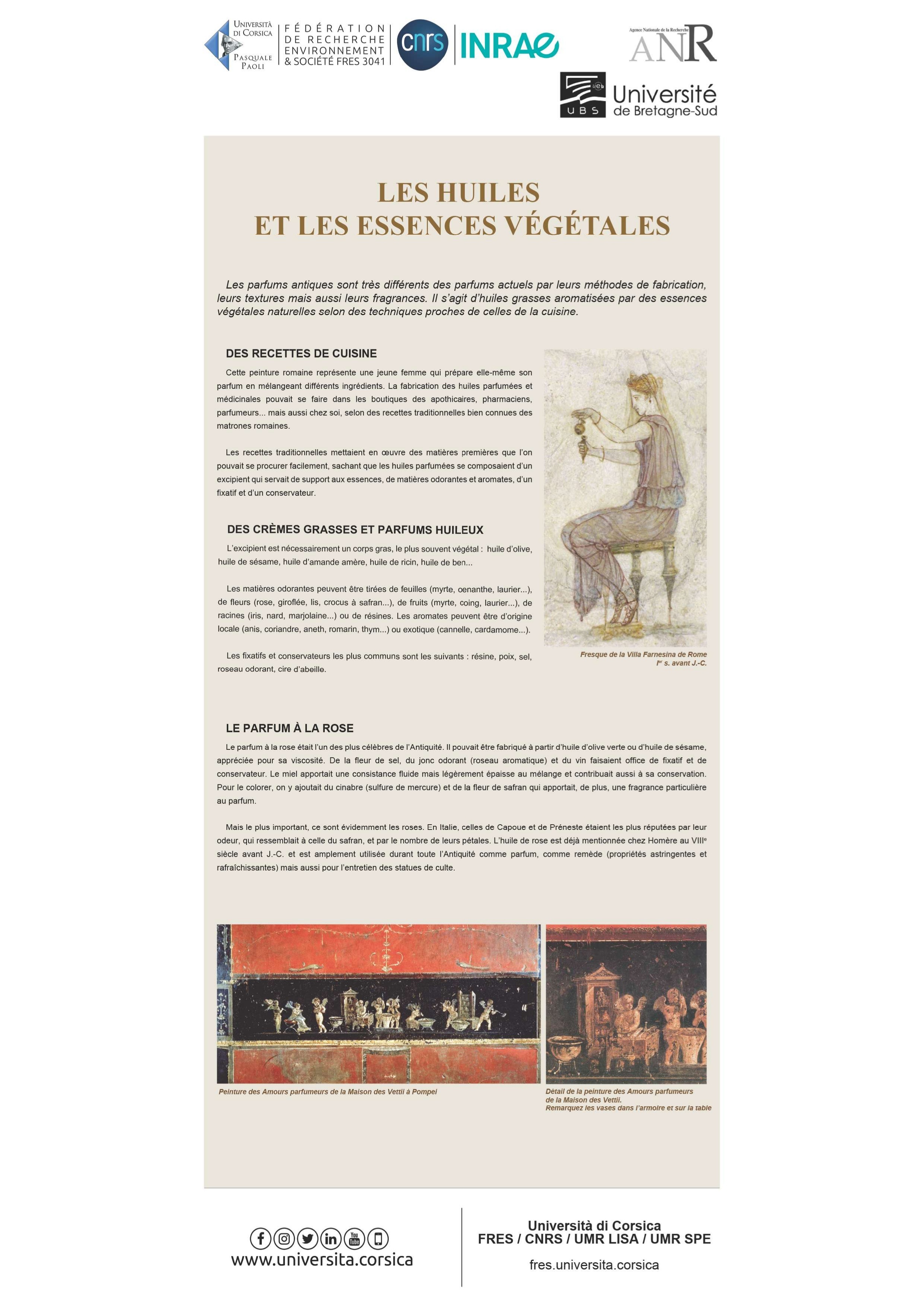
Oils and plant essences
Ancient perfumes are very different from today's perfumes in their manufacturing methods, textures and fragrances. They consist of fatty oils aromatised with natural plant essences using techniques akin to cooking. The fatty excipient (olive, sesame or castor oil) absorbs fragrant materials derived from leaves, flowers and fruits. These preparations could be made by apothecaries or at home.
Panel 04
Manufacturing techniques
Written, epigraphic and archaeological sources, along with chemical analyses, reveal the manufacturing methods of ancient perfumes. Flowers gathered at dawn, maceration in wine or honey, drying of leaves, long maturation of iris roots – each ingredient demanded its own timing and expertise. Production was seasonal, depending on the raw materials used
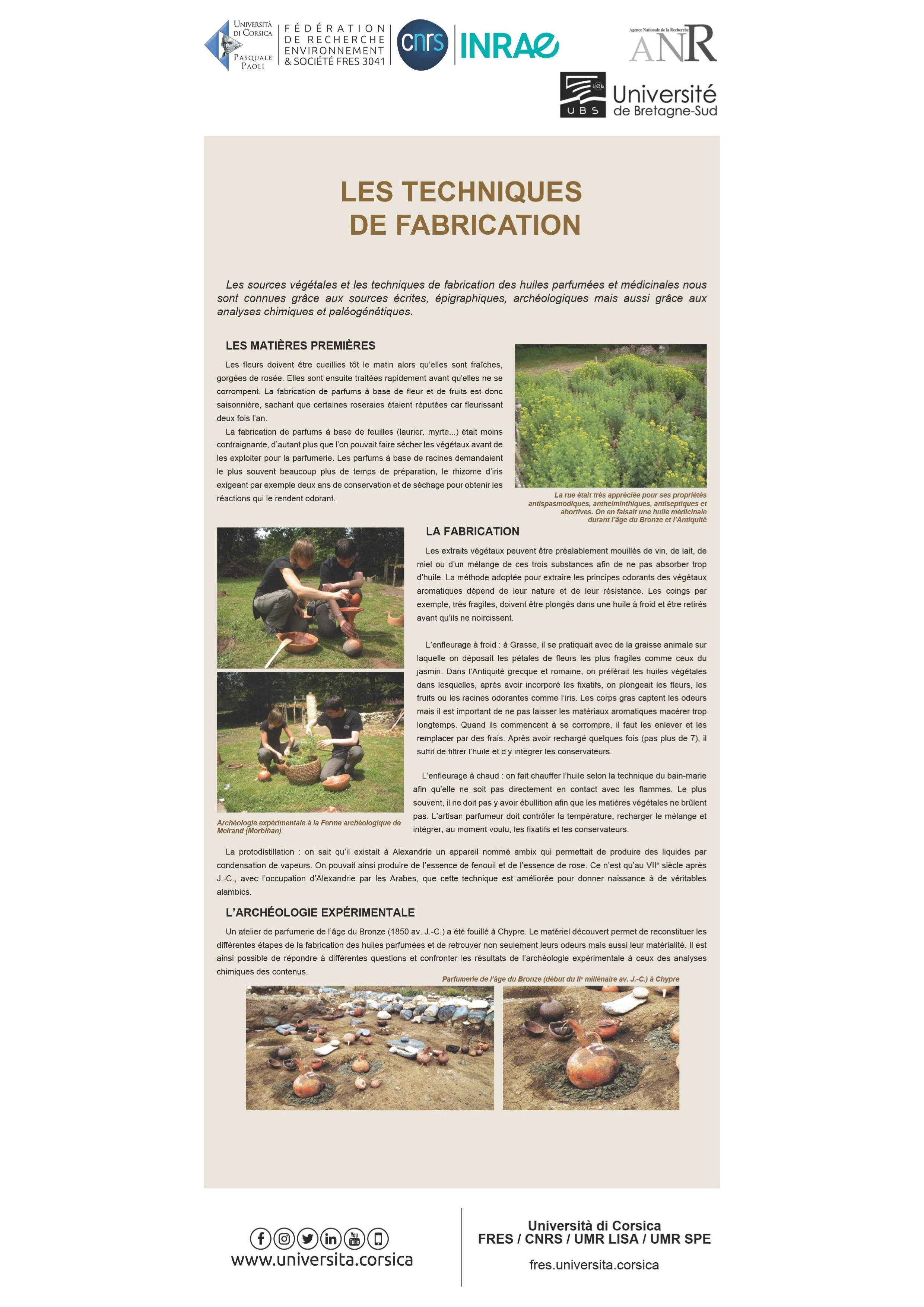
Panel 05
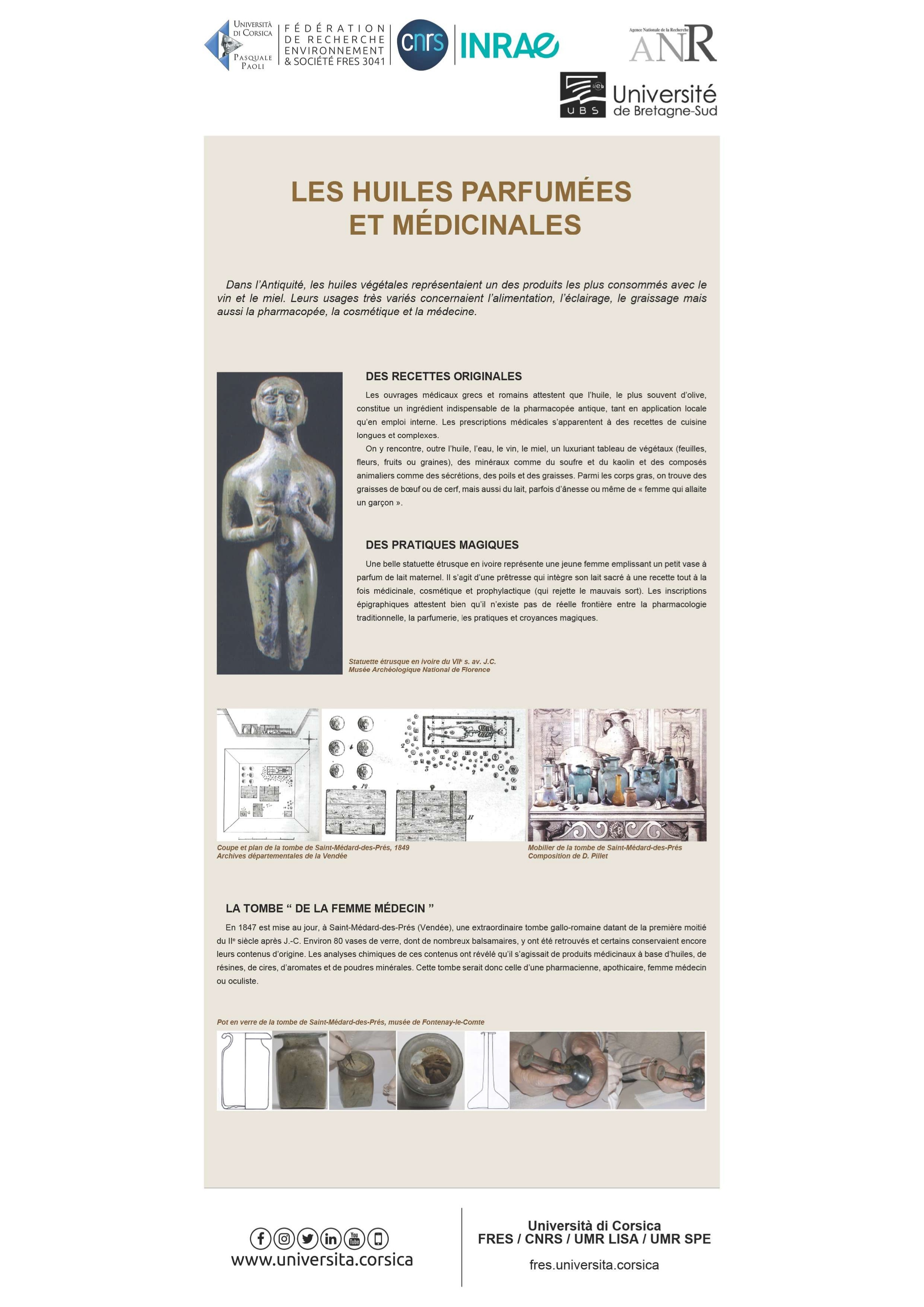
Perfumed and medicinal oils
In Antiquity, plant oils were among the most widely consumed products alongside wine and honey. Oil, especially olive oil, lies at the heart of ancient pharmacopoeia. Greek and Roman medical prescriptions combined plants, minerals and animal compounds in complex preparations. Cosmetics, medicine and magic were often intertwined.
Panel 06
Egyptian vases
As early as the 4th millennium, Mesopotamia and Egypt invented the first perfume bottles, remarkable for their beauty and functionality. Made of alabaster, gypsum, chlorite or copper, these small narrow-mouthed vessels were crafted to preserve precious oils. They represent the first 'luxury furniture' associated with world perfumery.
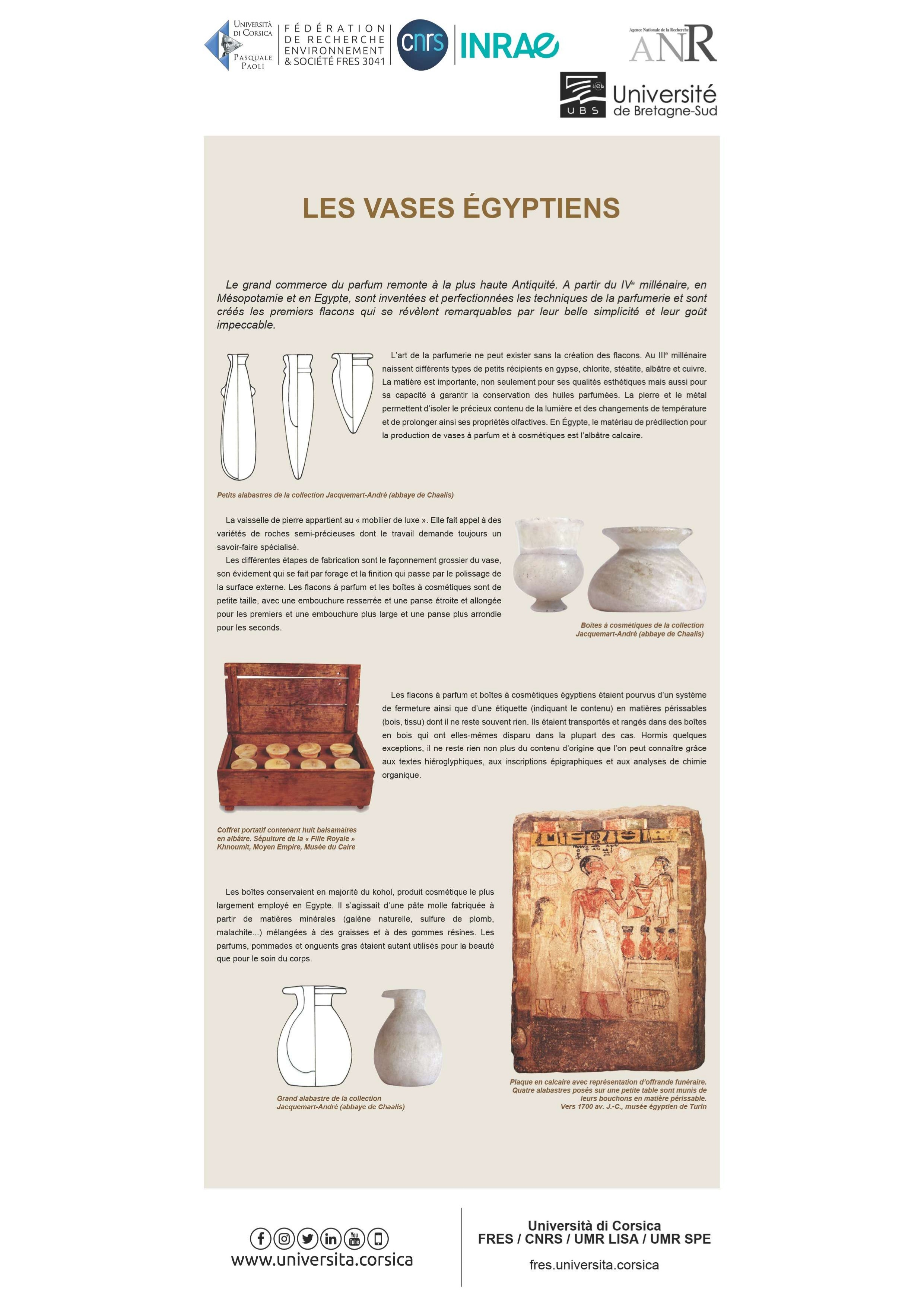
Panel 07
Greek, Etruscan and Roman vases
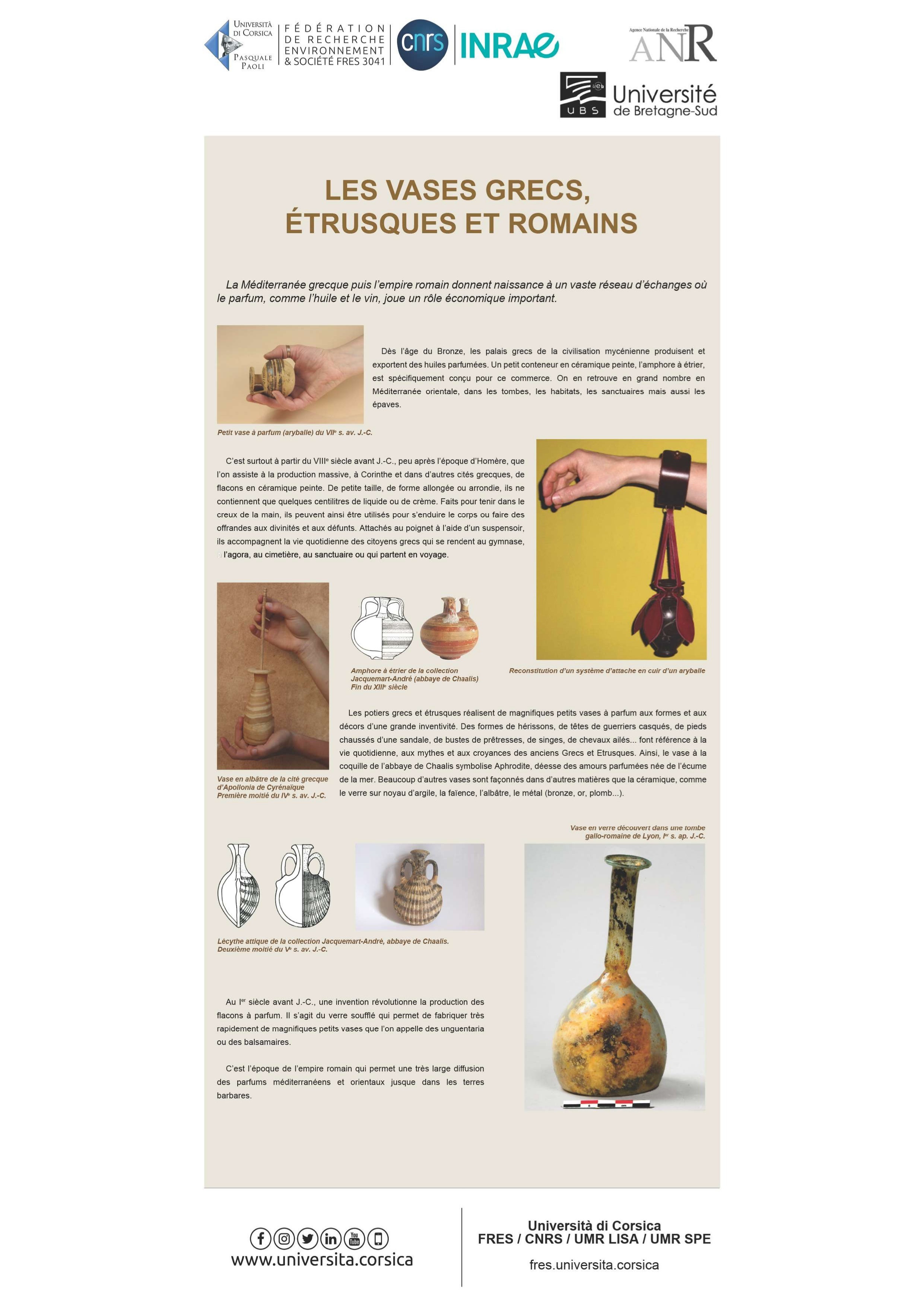
From the 8th century BCE onwards, Corinth and the great Greek cities mass-produced small painted ceramic flasks called aryballoi. Worn at the wrist, used at the gymnasium, in the agora or during funeral rites, they bear witness to the central place of perfume in Mediterranean daily life.
Panel 08
The revolution of palaeogenetic analyses
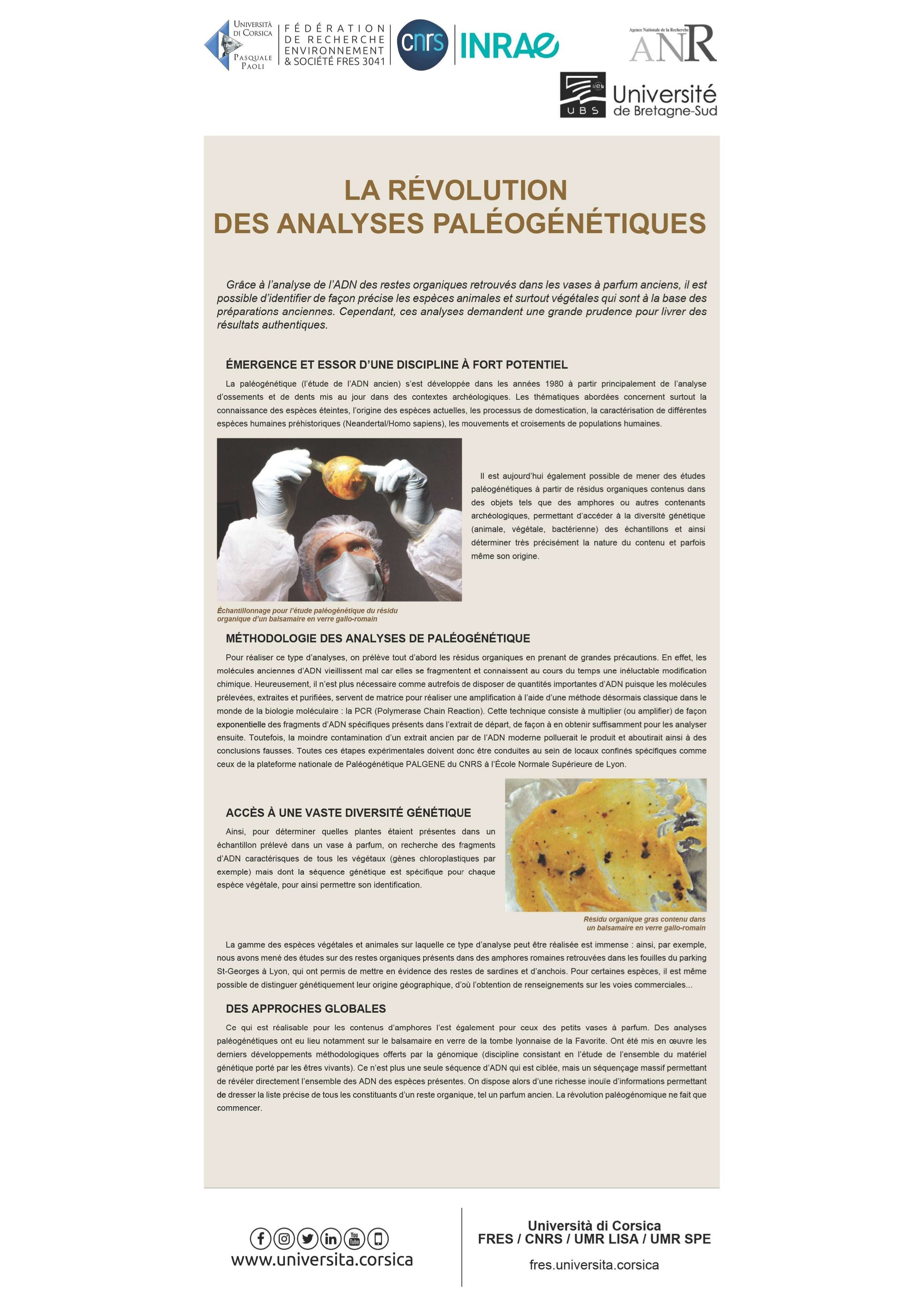
The analysis of ancient DNA contained in organic residues from archaeological vessels enables the precise identification of the plant and animal species that made up ancient perfumes. This discipline, born in the 1980s, opens up new perspectives on the origin of ingredients and the trade routes of Antiquity.
Panel 09
Chemical analysis of ancient perfumes
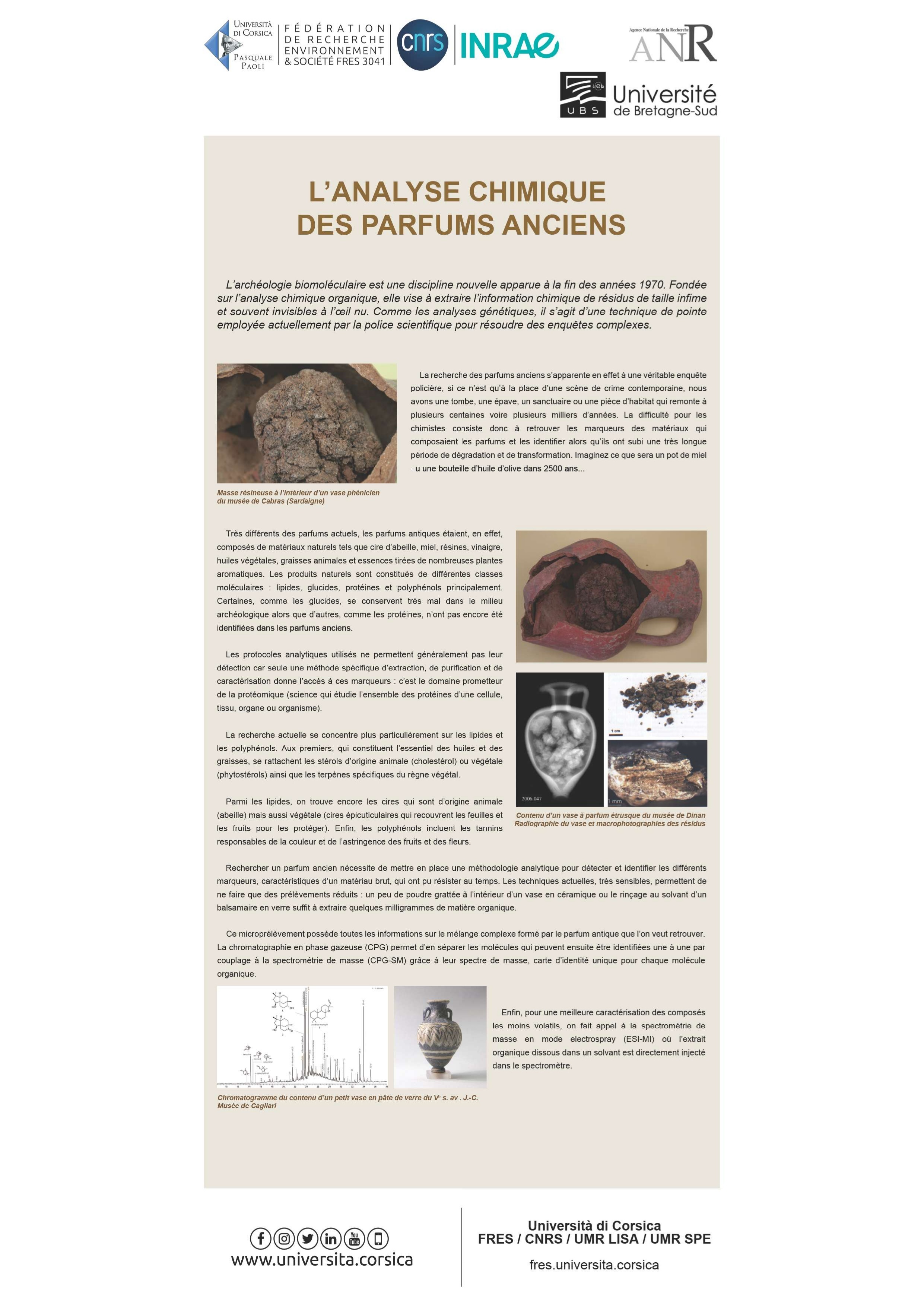
Biomolecular archaeology, which emerged in the late 1970s, extracts chemical information from minute residues found in tombs, shipwrecks or sanctuaries thousands of years old. Like a forensic investigation, it identifies material markers – beeswax, resins, plant oils – despite centuries of degradation.
Panel 10
Women healers, sorceresses or witches?
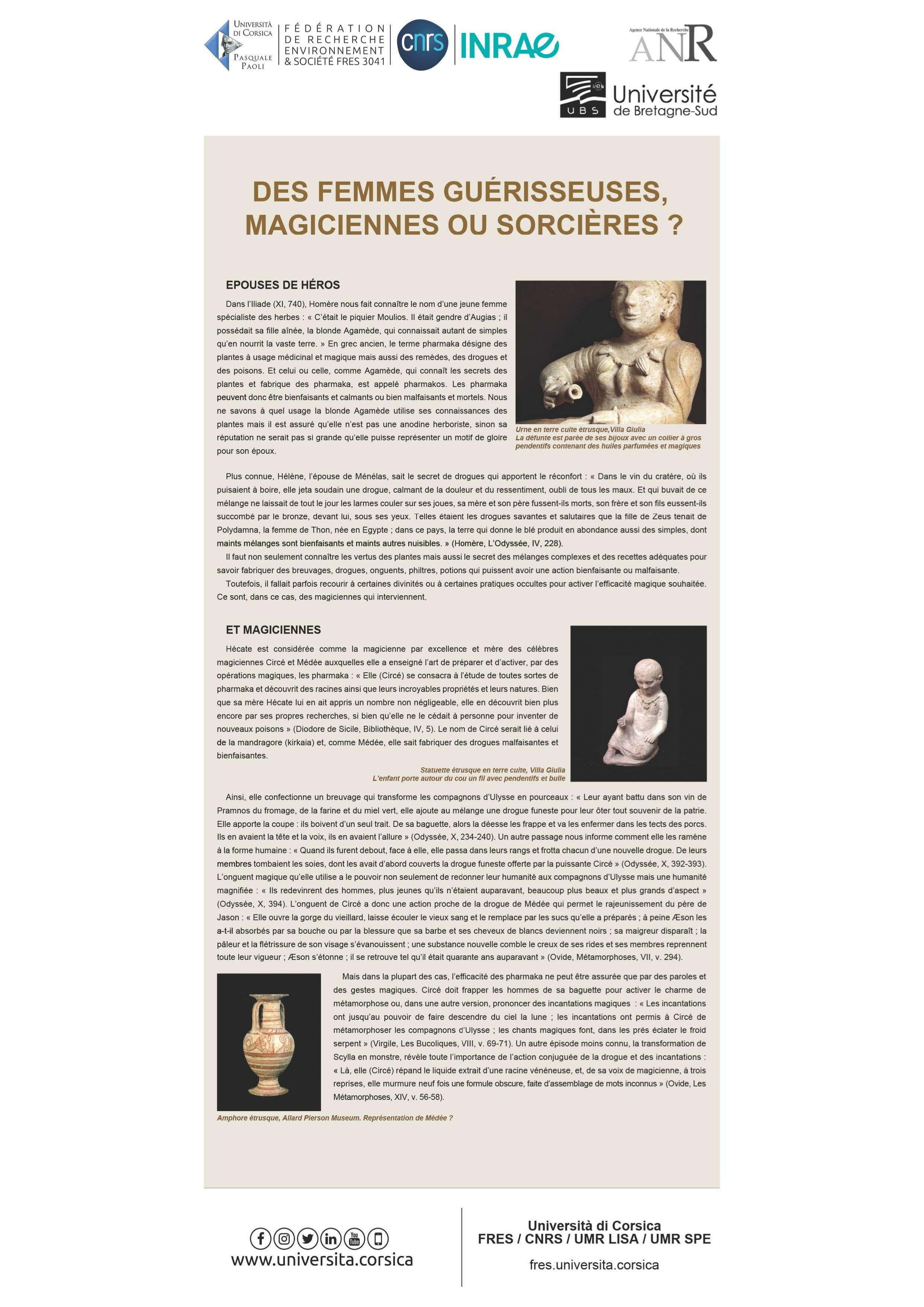
In the Greek world, pharmaka – medicinal plants, drugs and poisons – are associated with female figures such as Agamede or Helen. Privy to plant secrets, these women embody the boundary between healing, magic and malice in ancient society. The term pharmakos denotes the person who prepares such concoctions.
Panel 11
Magic plants and pharmaka
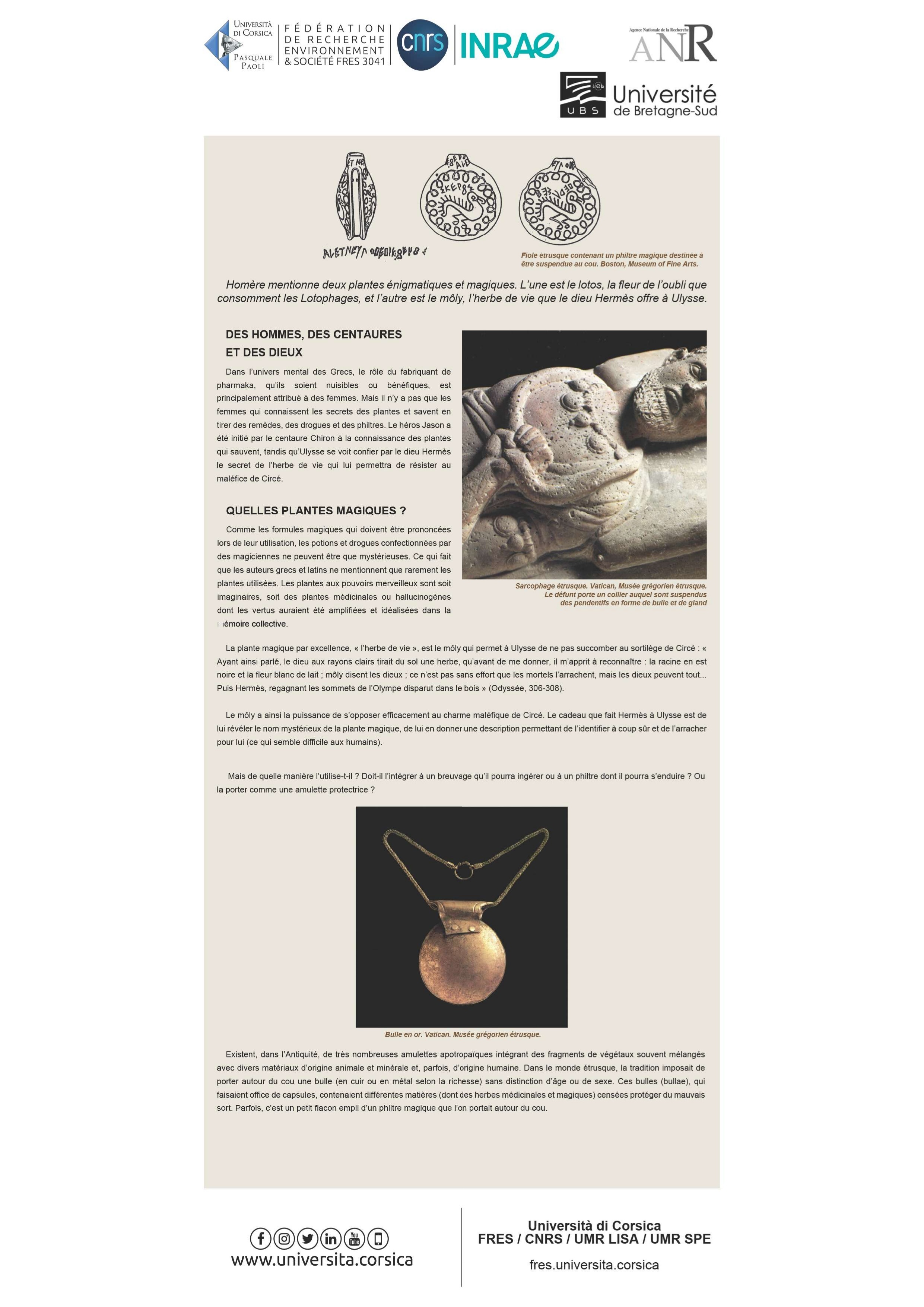
Homer evokes the lotos, flower of oblivion, and the môly, the herb of life given by Hermes to Odysseus. Heroes and gods sometimes initiate men into the secrets of beneficial or deadly plants. These plants, often imaginary, exist alongside real medicinal or hallucinogenic plants used in the making of potions and drugs.
Panel 12
Perfumes in ancient Corsica
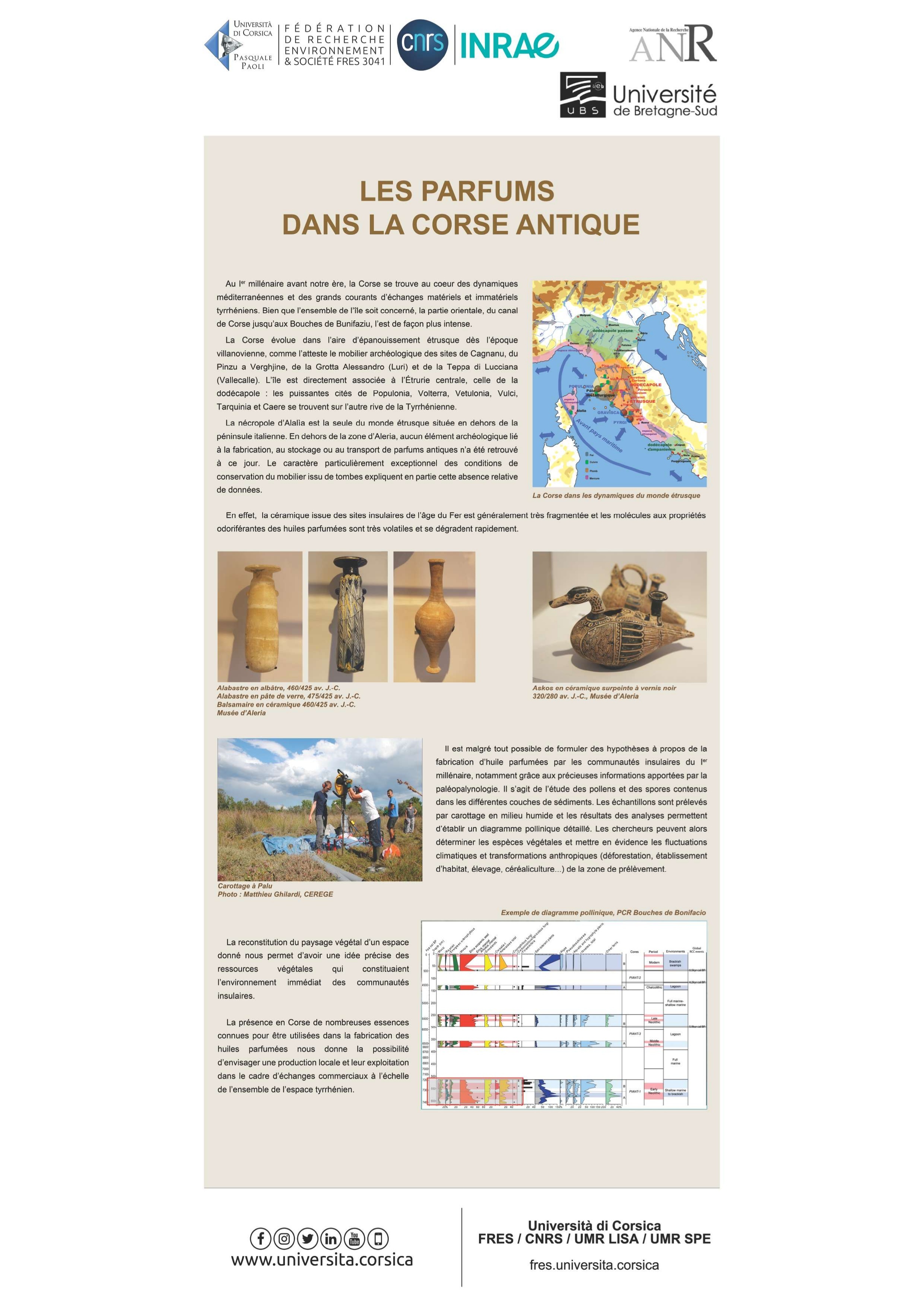
During the 1st millennium BCE, Corsica was integrated into Tyrrhenian and Etruscan dynamics. The necropolis of Alalia (Aleria) is the only one in the Etruscan world outside the Italian peninsula. The sites of Cagnanu, Luri and Vallecalle attest to links with the great Etruscan cities. No element related to perfume production has yet been found outside the Aleria area.
Panel 13
An interdisciplinary approach
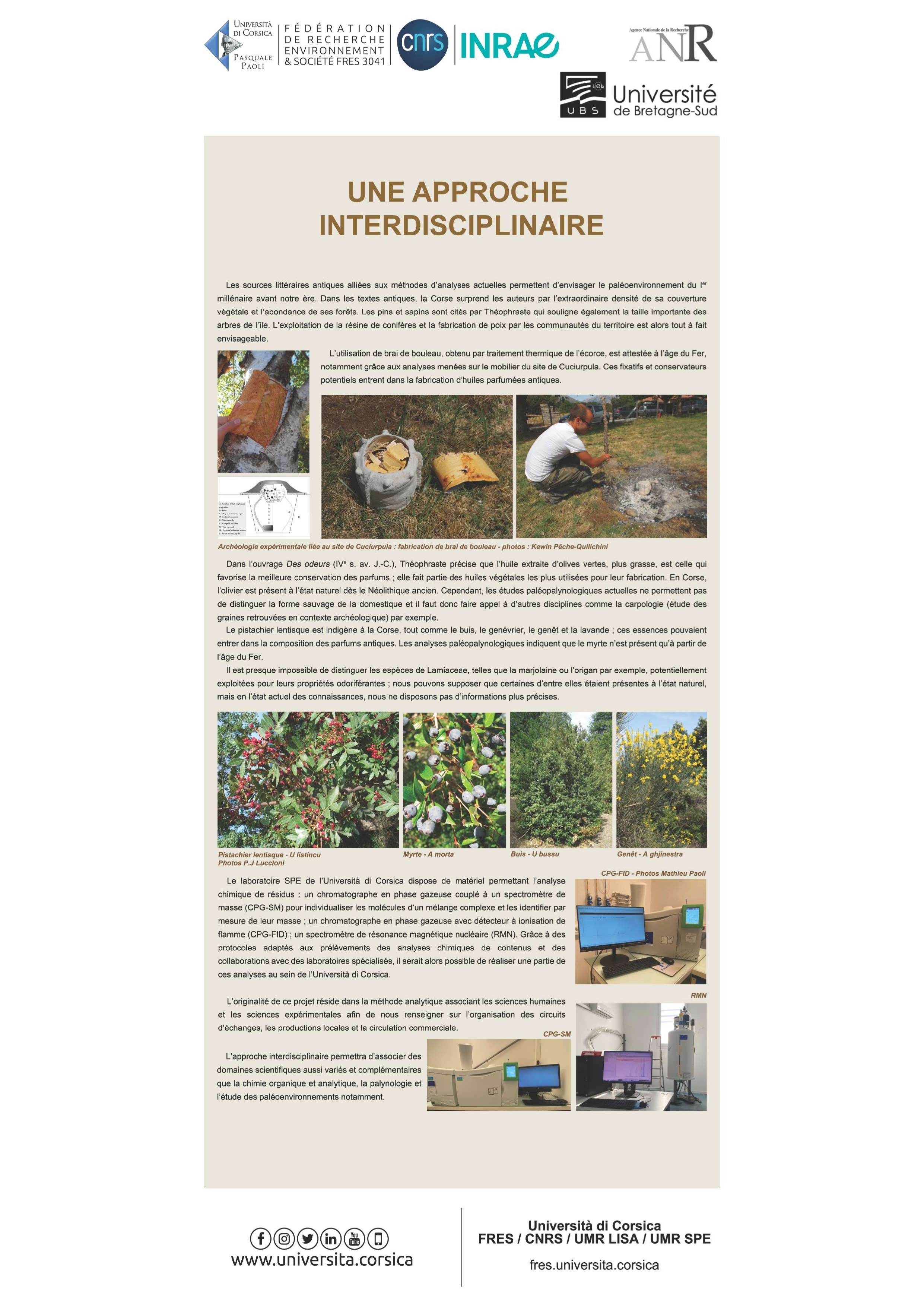
Combining ancient literary sources with modern analyses, this panel explores the Corsican palaeoenvironment of the 1st millennium. The use of birch pitch attested at Cuciurpula, the presence of olive trees since the Neolithic, and the abundance of conifer resins reveal a territory rich in raw materials for perfumery. Palaeopalynological studies further complete this environmental picture.
Discover other virtual exhibitions
-
Our virtual exhibitions have been created following temporary exhibitions, with the aim of perpetuating and opening up research data. Intended to support the cultural learning of the general public, they are a scientific mediation tool that offers an immersive experience and promotes the acquisition of knowledge through digital means.
-
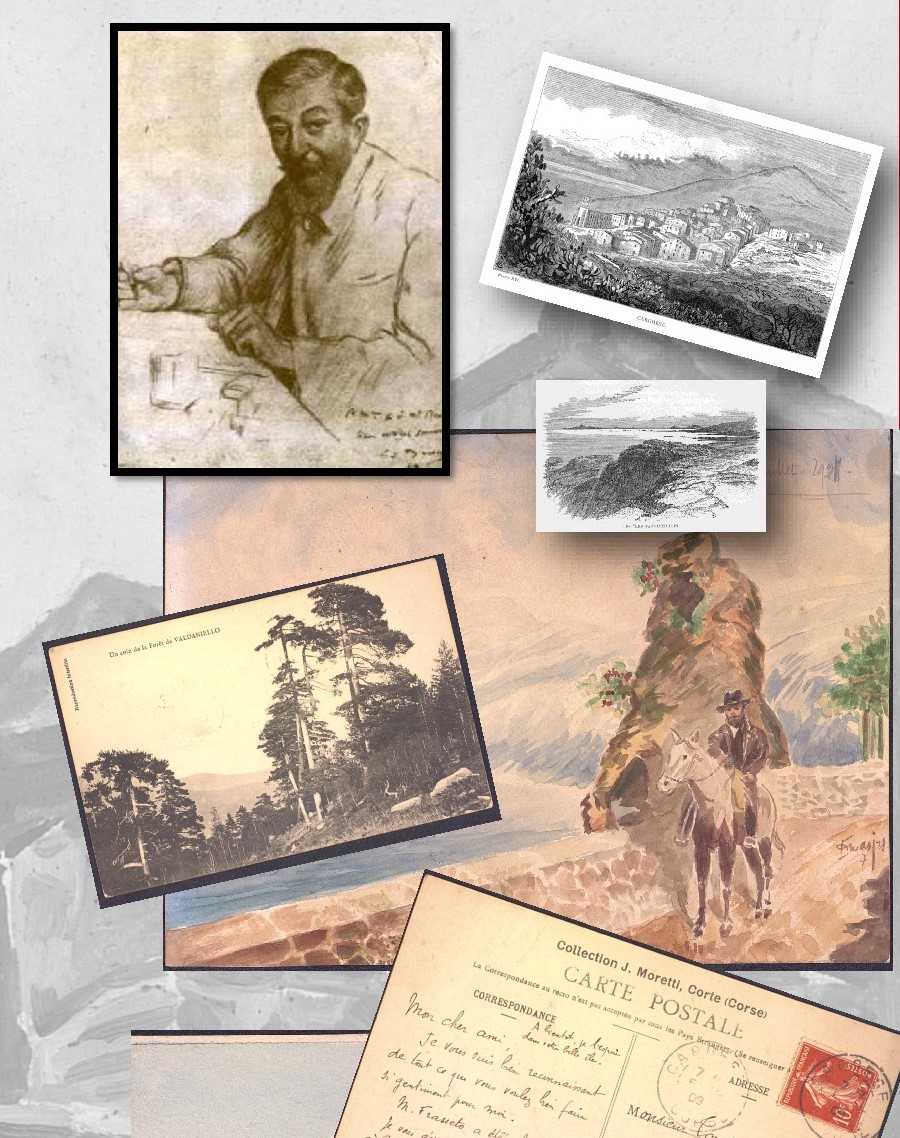
La Corse des voyageurs. Impressions et récits XVIIIe - XXe siècles
-
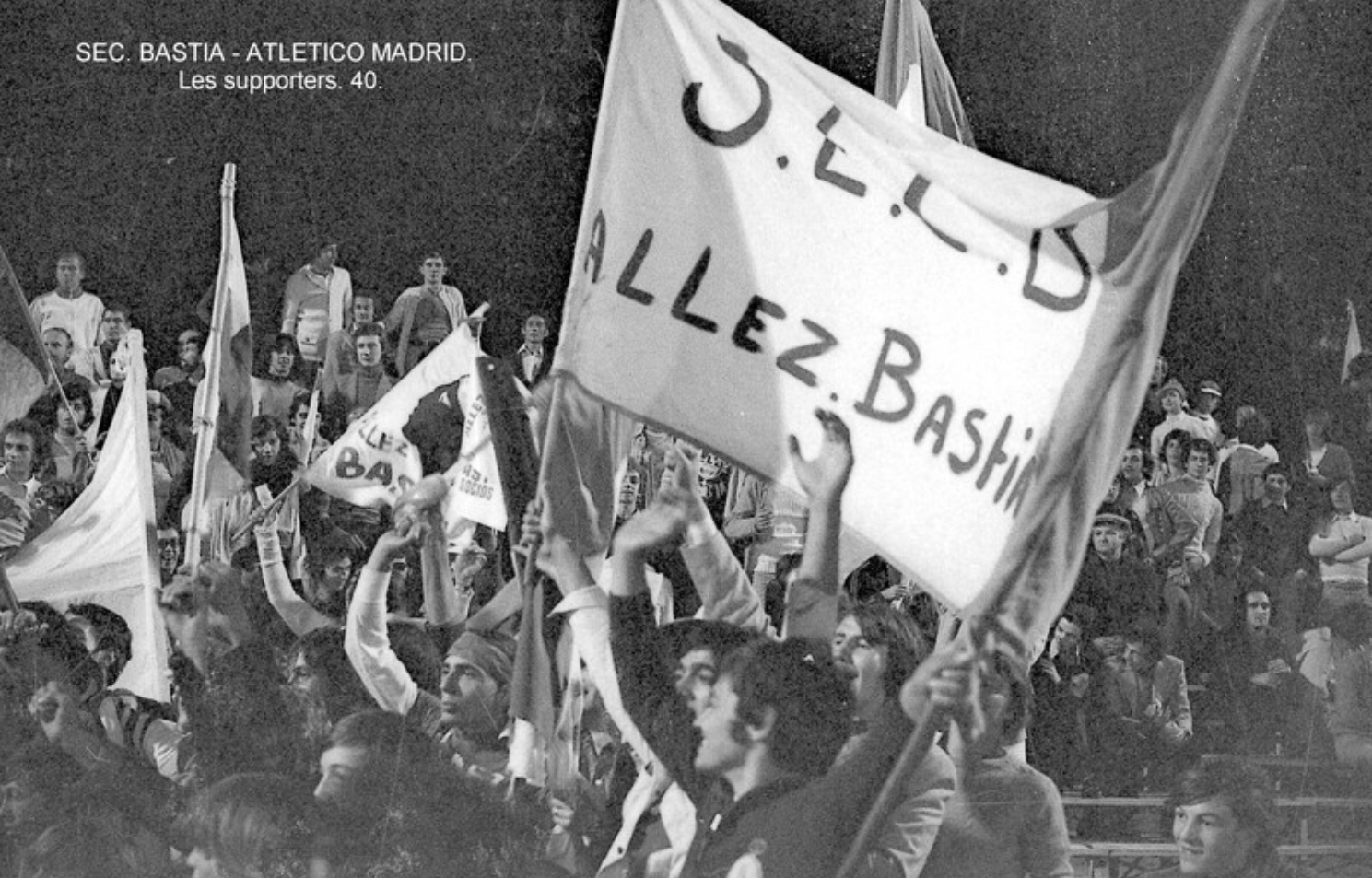
Sporting Club de Bastia
-
Joseph-Antoine Canasi, témoin et acteur de son temps (1880-1960)